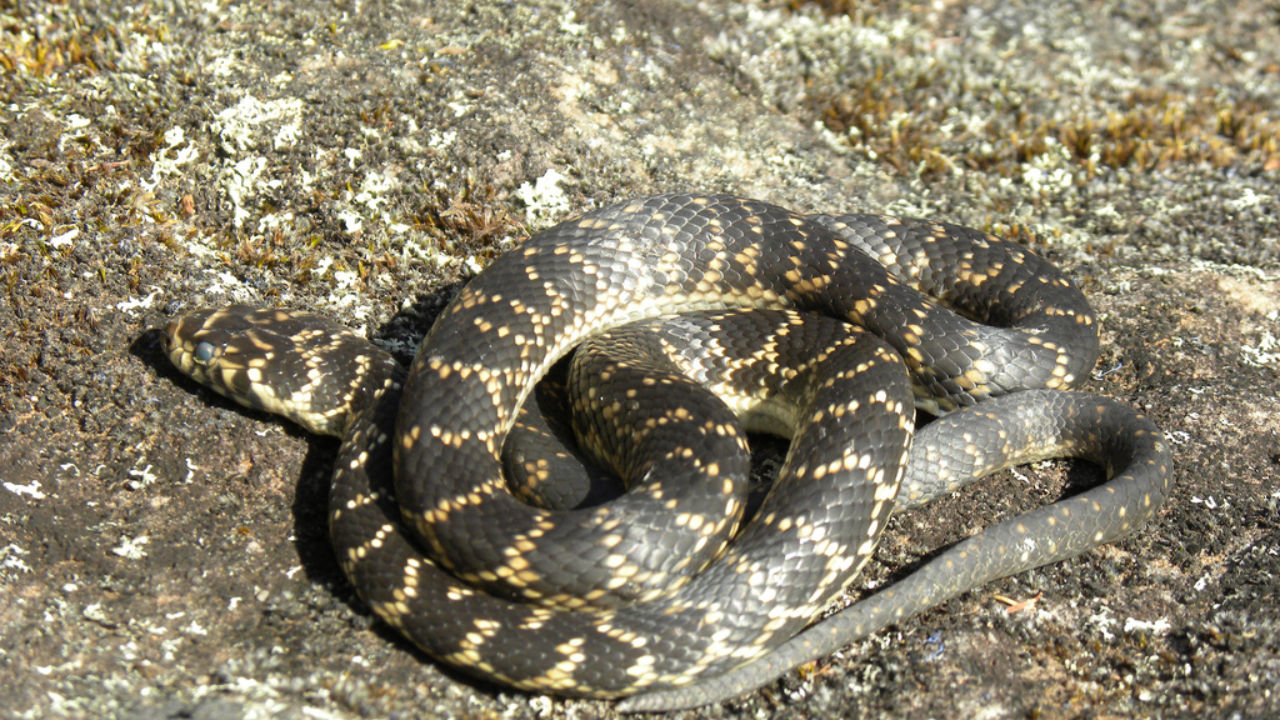
Australia releases six rare snakes into wild after world-first breeding effort
Image: Wikipedia Endangered broad-headed snake conservation has reached a world first, with captive-bred juveniles released into the wild in Australia. The reptile, native only to sandstone escarpments around the Sydney Basin, faces serious decline, yet a breeding programme in New South Wales that began with just 17 wild-sourced adults has now returned six young snakes to their natural rocky habitat. The release involved the University of Technology Sydney and Traditional Landowners of the Shoalhaven, and it follows two years of world-first milestones. The outcome gives conservationists a working model for protecting one of the country’s rarest reptiles while shelter sites keep disappearing. Inside the specialist terrariums where the world’s first captive birth of the species took place According to Aussie Ark’s announcement of the release, the conservation organisation secured the founding adults in October 2024 to create the world’s first wild-sourced breeding and rewilding programme for the species. The insurance population later grew to 20 snakes, all housed in specialised terrariums at Conservation Ark in Somersby, New South Wales.Early in 2026, the programme recorded the world’s first captive birth of the species. Only weeks later, remote-sensor cameras captured a live birth, something never witnessed or documented before. By the time of the May 2026 announcement, eight juveniles had been bred. Two stayed in the insurance population because of their important genetics, and the other six went into the wild. Image: Wikipedia Why artificial rocks matter for a nocturnal snake that has lost so many natural hiding places The broad-headed snake shelters under rocks by day and hunts at night. Habitat destruction, illegal rock removal and fragmentation have stripped away the shelter sites it depends on. Professor Jonathan Webb, who has studied the species for more than three decades, said habitat loss remains the greatest threat to its survival.Webb explained that the rocks let the snakes regulate their body temperature and hide, and that they also attract prey. Much of that habitat has been cleared over the decades for landscaping and building. He described the pilot programme using artificial rocks as vital to the snakes’ survival. All six juveniles were released beneath specially designed artificial rocks. Each snake carries a unique marking on its head, so the team can identify every released animal and monitor it over the long term. Indigenous rangers are being trained and supported to monitor and protect the species on Country The programme also trains and supports Indigenous rangers, so that monitoring and protection continue on Country long after the first release. Ranger Ashley Thomas said the work is more than a job: “I love it, it’s not a job for me, it’s a passion of mine.” He described the effort as everyone coming together to do what is best for Country.Traditional Owner Frank Connolly Junior said the broad-headed snake is important to his culture. He added that the programme lets young people learn about it, so the knowledge passes to the next generation. Release day cheers and a holistic conservation model for threatened species across Australia Project lead Dylan Wallis and Chief Conservation Officer Hayley Shute released one of the juveniles together, and cheers erupted from the crowd as the snake vanished into its new home. “It was thrilling to watch the snakes zip off into the wild,” Shute said.Aussie Ark Managing Director Tim Faulkner called the moment proud and emotional for everyone involved, saying the team had spent many years navigating red tape to reach it. He described the result as a unique, holistic programme that serves as a model for threatened species conservation across Australia.Major partners Australian Power Equipment and the Sunshine Foundation supported the work. The species is also recognised as a priority threatened species under New South Wales and Commonwealth conservation programmes and legislation.
More top stories
Human Remains Found On Ship Struck In Black Sea Off Romanian Coast
"During debris-clearing operations, severely damaged human remains were discovered," the prosecutor's office in the eastern Bulgarian city of Varna said in a statement.
Why Week After Diwali Will Be Delhi's Biggest Pollution Test
While public attention during the festive season centres around firecrackers, a true public health disaster unfolds in the background one created by a variety of factors.
Mohd Shami: A master of seam and swing
Opponents have dissected Shami’s craft because their survival depended on it: but knowing why he did what he did or how was not always insurance against its efficacy. Teammates, especially aspiring young quicks, have examined his preparation and mindset, but that was no guarantee they could emulate him, even with his willing assistance. Experts have marvelled at Shami’s sustained excellence, the undeniable beauty of how he cruelly exposed batsmen before getting them out.
East Bengal Become First Indian Club To Reach AFC Women's Champions League Knockouts
East Bengal FC suffered a 2-0 defeat against North Korean side 4.25 SC in their final Group B fixture of the AFC Women's Champions League 2026-27 in Kolkata on Saturday but secured a historic place in the quarter-finals.

Bengaluru airport declares full emergency after security threat on Lucknow-bound IndiGo flight
A full emergency was declared at Bengaluru airport after a suspected hijack threat note was found in the washroom of a Lucknow-bound IndiGo flight.
After the midterms, things are looking rocky for Elon Musk and data centers
On Equity, we unpacked what the midterms mean for the tech industry.

Gunman Kills Six People in Krakow, Polish Police Say
The gunman who killed six people in the historic Old Town district of Poland’s second largest city on Saturday is likely a domestic far-right extremist, according to Interior Minister Marcin Kierwinski.

US detains Lawrence aide Harry Boxer, extradition efforts on
. NEW DELHI: Notorious gangster Hari Chand Jaat, aka Harry Boxer, has been detained in US at the instance of Indian law enforcement agencies. Boxer was apprehended in California Friday and efforts are on to bring him back to India, sources said. Coming close on heels of gangster Himanshu Bhau's detention, the development has sent ripples across the underworld, with many gangsters planning to leave US, they said.Indian security and intelligence agencies had been closely tracking Boxer's movements since the firing incident at film director Rohit Shetty's home in Mumbai earlier this year. His detention is being seen as a big breakthrough as Boxer operated a core module of the Lawrence Bishnoi criminal syndicate from overseas.His name had also surfaced in connection with firing incidents at comedian Kapil Sharma's cafe in Canada, besides several cases across Delhi, Rajasthan, Punjab and Haryana.Boxer (40), a resident of Chatarpura village in Kotputli-Behror of Rajasthan, earned his moniker due to his background as a sports enthusiast and boxing coach. Transitioning from a sporting and farming background, he moved into the underworld and has been absconding since 2022, eventually fleeing India. Join conversation View All Comments → Share your thoughts in the comments Insightful Agree Disagree Skeptical Concerning Promising Worth Reading Big Development Post Comment Be respectful · TOI community guidelines His latest detention follows a brief detention in Jan 2026, when he tried applying for asylum and was temporarily held by immigration authorities before being allowed to leave, sources said.Indian agencies are currently coordinating efforts to secure Boxer's custody. Poll Vote & Share your view What should be the government's priority following the detention of figures like Harry Boxer? Tracking down more criminalsReforming law enforcementImproving community safetyInternational cooperation 3k+ users shared opinion today 5k+ users already voted today 3k+ users shared opinion today Share Opinion
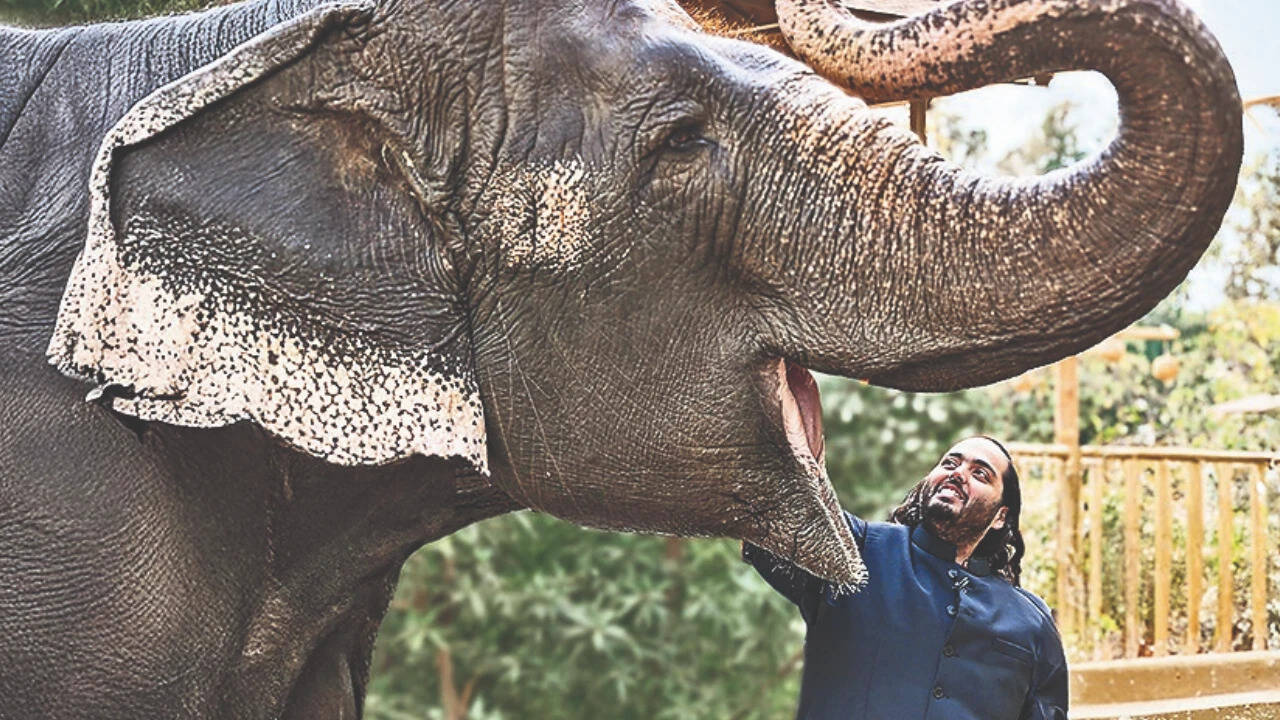
Elephant calf airlifted from Keralam to Vantara for life-saving treatment
Maya, an elephant calf found alone as a newborn on a riverbank 18 months ago, was airlifted from Keralam to Vantara's hospital in Jamnagar on Nov 5, after fractures in both front legs left her unable to stand.Acting on an initiative by RIL exec director and Vantara founder Anant Ambani, the organisation deployed a specialised veterinary team following a transfer order from Keralam's chief wildlife warden, P Pugazhendi.Found near Kaprikkad on Apr 19, 2025, the weak, dehydrated newborn had not received her mother's milk and couldn't even suckle. Assistant forest veterinary officer Binoy Babu and caregivers fed and nursed her for over a year.In July 2026, Maya slipped while playing and injured her shoulder. Despite physiotherapy, splints & supplements, her bones became increasingly fragile. By Oct, she had front-leg fractures, a chest infection and pressure sores. Her prognosis was grave. Join conversation View All Comments → Share your thoughts in the comments Insightful Agree Disagree Skeptical Concerning Promising Worth Reading Big Development Post Comment Be respectful · TOI community guidelines After Kerala's chief wildlife warden sought wider expert opinion, Vantara veterinary adviser Kushal Konwar Sarma identified a possible parathyroid-related disorder that may respond to treatment. Yaduraj Khadpekar, head veterinarian at Vantara's Elephant Care Centre, concurred, and the medical board unanimously agreed.Maya travelled by a life-support airlift, accompanied by three Vantara elephant veterinarians, paravets and caregivers, along with Binoy C Babu and her familiar caregiver, Nikhil Babu. She will receive round-the-clock monitoring, pain management, advanced diagnostics, hydraulic lifting support and hydrotherapy where appropriate. Vantara - a global wildlife rescue, care, welfare and conservation initiative based in Jamnagar - will facilitate her return to Abhayaranyam after treatment.
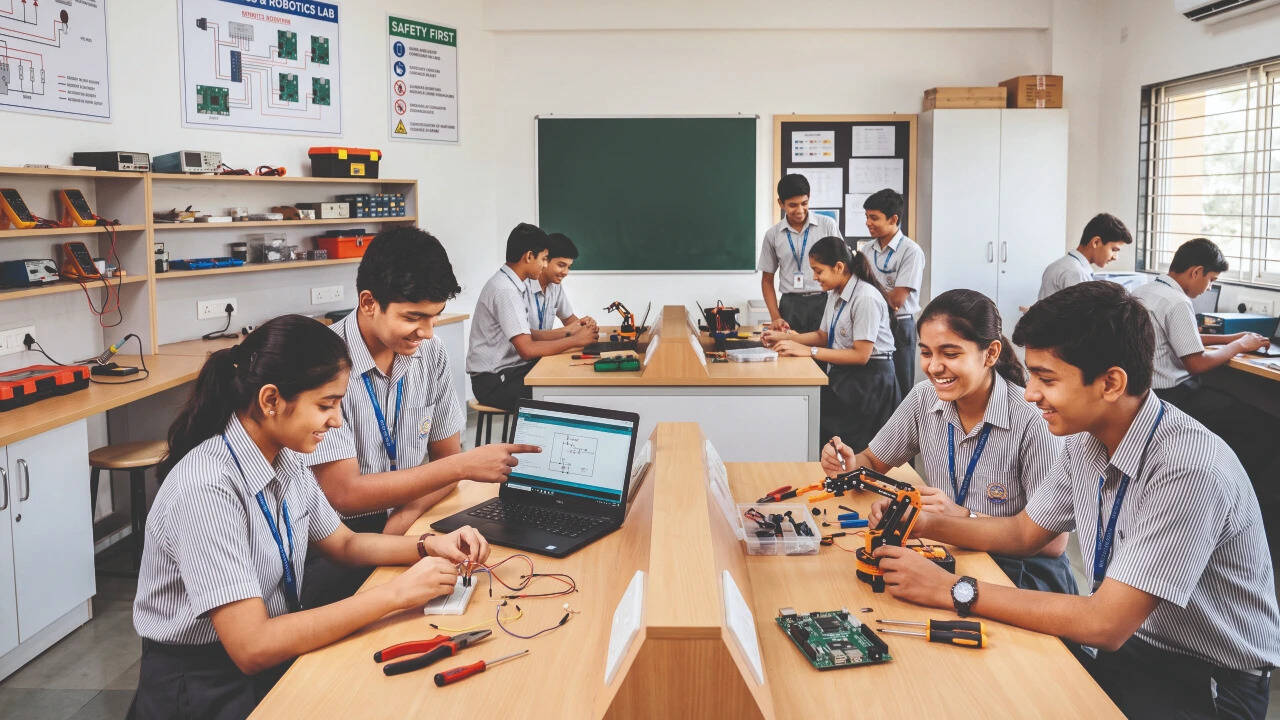
Skill subject to offer class X Board students a second chance
Students may no longer have to fear failing the class X board exams as the CBSE has introduced a new rule that not only enhances the relevance of vocational education but also offers students an alternative pathway to pass. From 2027-28, students who fail a core academic subject such as Maths, Science or Social Science, will be allowed to use a passed skill subject as a substitute.This rule is only for students who have opted for one of the 22 skill subjects in class IX under vocational education. This excludes Kaushal Vikas, which is also a skill subject but is assessed internally by schools.Under the revised framework, class IX students will study nine subjects, combining core and skill-based courses. Vocational education includes 22 skill-based subjects, including AI, Data Science, Information Technology, Financial Markets, Automotive, Retail, Design Thinking, and Health Care.Under the NCF-SE, vocational education is mandatory from classes VI to X.A senior CBSE official says the goal is to expand choices for students and promote competency-based, experiential learning by embedding activity-based life skills alongside core academics. Class X students now have two attempts to pass CBSE boards in class X. If a student still cannot clear one core subject, this vocational component provides a cushion to clear class X and move to the next grade.A student who fails a core subject but passes class X through a skill subject can still sit for an improvement examination in the failed subject. CBSE does not have any regulation on which stream the student enrols in class XI as that is the school's discretion. Join conversation View All Comments → Share your thoughts in the comments Insightful Agree Disagree Skeptical Concerning Promising Worth Reading Big Development Post Comment Be respectful · TOI community guidelines "Even if the student passes the boards using skill subject marks, he will have to pass Math or Science to enrol in science stream in class XI," adds the official.Teachers dismiss the idea that the replacement rule will dilute academic rigour, viewing it instead as a constructive stress buster. "This provision will help reduce examination stress, particularly among academically weaker students," says a teacher from PM SHRI KV NER Bareilly.
Presidency University expels student for allegedly defacing Vivekananda poster
The university also barred an ex-student from the campus; SFI condemns expulsion, ABVP welcomes authority action

Psychology says people who enjoy being alone often share these traits
Many individuals find joy in solitude, which offers them opportunities for reflection and personal interests. They often make choices independently and participate in activities according to their preferences. Engaging with nature and pets can enhance their experience of solitude, providing companionship. While they maintain relationships, they prioritize meaningful connections over constant social interaction. Understanding solitude as a personal choice distinguishes it from feelings of loneliness, highlighting its potential benefits.
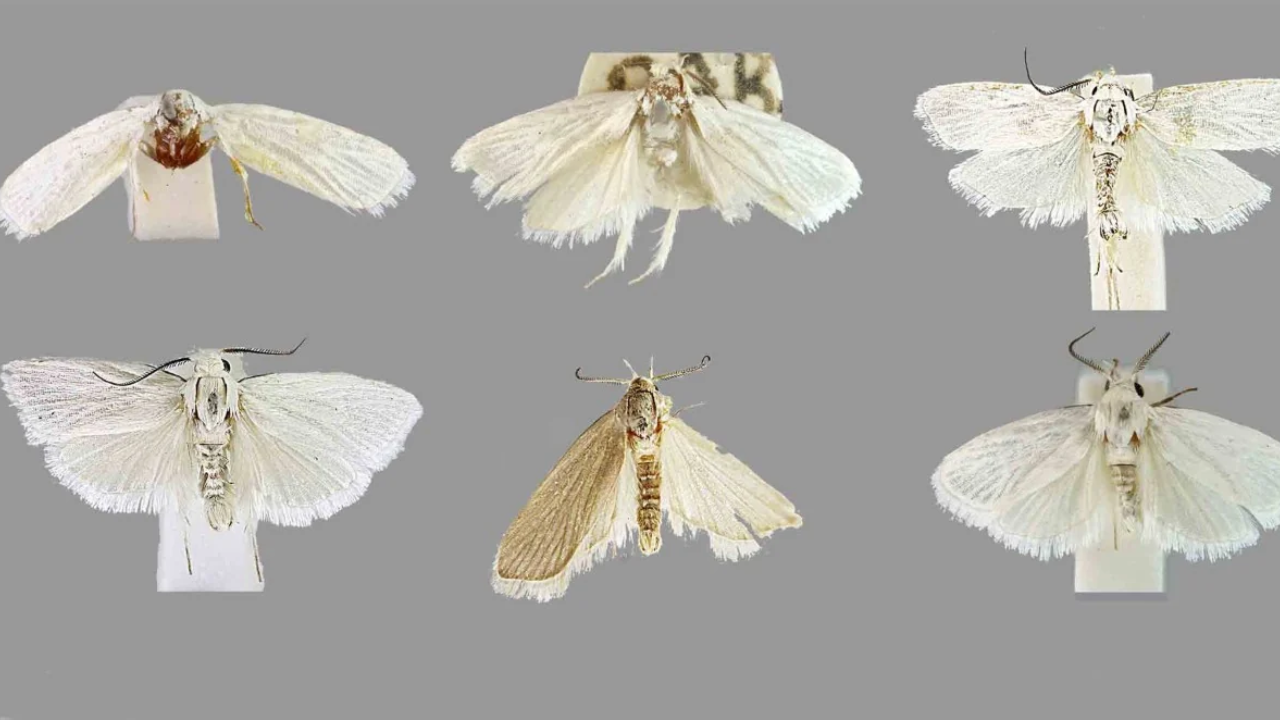
170-year-old moth in museum drawer helps scientists identify 11 new species
Image: Mark Sterling A battered moth that had spent decades overlooked in the Natural History Museum's collection has helped scientists identify 11 species previously unknown to science. The tiny specimen was collected in Sarawak, Borneo, by British naturalist Alfred Russel Wallace around 1855-1856, but its significance went unnoticed for generations. Consisting of little more than a thorax and a pair of wings, it had even been dismissed by an earlier expert as unworthy of further attention. Modern DNA sequencing and research into its original labels eventually revealed its identity, allowing scientists to revive an entire moth genus. Alfred Russel Wallace's forgotten moth was found among millions of museum specimens The discovery came while Natural History Museum scientific associate Mark Sterling and senior curator Dr David Lees were examining a collection of small, snow-white moths from Southeast Asia. They were investigating several specimens that appeared to represent previously undescribed species when an old, damaged moth became central to their research. The specimen had originally been described in 1863, but its deteriorated condition made identification difficult. In 1927, moth expert Edward Meyrick had recommended that it was 'better neglected'. Sterling and Lees took a closer look after noticing clues on its original labels, which suggested a much more significant history. A tiny label connected the moth to Wallace's expedition in Borneo One of the specimen's labels carried the abbreviation 'SAR', which caught the researchers' attention. The letters stood for Sarawak, a region in what is now Malaysian Borneo that Wallace visited during his travels through Southeast Asia. The researchers compared the label with historical records and Wallace's own account of his expedition, published in The Malay Archipelago. His writings described collecting moths from a bungalow near Kuching, Sarawak, between December 1855 and January 1856. The location and other historical evidence helped Sterling and Lees establish that the damaged specimen had been collected by Wallace during that period, almost 170 years earlier. Image: Mark Sterling DNA sequencing helped scientists revive the forgotten moth genus Topiris The researchers used a new DNA sequencing technique being trialled at the Museum to examine the specimen. Even though the moth was badly damaged, they were able to extract a tiny piece of its leg and obtain genetic information. The results showed that it belonged to the same species as more recently collected specimens from nearby Brunei. Further analysis established that the other moths under investigation also belonged to the genus Topiris. The findings allowed the researchers to resurrect the genus, which had effectively fallen out of scientific use following the earlier dismissal of the original specimen. The study was subsequently published in the journal ZooKeys. Image: Mark Sterling Eleven new moth species were named, including one after Greta Thunberg The research expanded Topiris into a group of 14 species, 11 of which were newly described by scientists. Among the newly named moths were species inspired by the fictional characters Snow White and Cinderella, while another was named in honour of environmental activist Greta Thunberg. The discovery demonstrated how historical museum collections can still contribute to modern scientific research, even when individual specimens appear too damaged to be useful. The butterfly and moth collection contains approximately 13.5 million specimens, representing more than 100,000 species. The Wallace moth's rediscovery showed that overlooked material stored in museum drawers can still hold important clues about biodiversity and evolution.

How Venice's buildings have stood for centuries on millions of wooden piles
Venice, crafted upon multiple small islands in its lagoon, became a fortified settlement against invaders. Builders tackled the challenge of soft soil by anchoring wooden poles deep into the ground, ensuring that their constructions were solid. The timber foundation tells a story of diverse tree species meticulously installed by skilled workers.

Jumbo hustle: the transfer of elephants to Tamil Nadu’s temples
The unseemly haste with which five elephants from Assam were transported to temples in Tamil Nadu raises pertinent questions about the process of animal transfer, and whether the rules are cheat proof. Here, Geetha Srimathi examines the entire issue threadbare, explaining how elephants are acquired for temples in the State, and the yawning gaps in the rules, and processes that allow humans to ‘trade’ in pachyderms.

Water released from Shenbagathoppu dam due to rain
Tiruvannamalai Collector Vandhana Garg has warned residents in Cheyyar, Arani, Vandavasi, and Polur towns along Kamandalam Naganathi river against crossing the waterbody as the waterflow in the river is on the rise